
Views: 0 Author: Site Editor Publish Time: 2026-05-20 Origin: Site


Battery systems face increasing energy densities and strict thermal runaway safety regulations today. Standard thermal barriers often fail under the harsh physical realities of standard module lifecycles. We must aggressively rethink how we isolate and protect these volatile, high-energy systems. The industry is rapidly shifting from generic dielectrics to engineered composite insulation material platforms. These advanced barriers must simultaneously manage extreme heat and withstand severe cell swelling pressures. They also need to support high-volume automated manufacturing without risking structural degradation over time.
This guide serves as an objective evaluation matrix for battery engineers and technical decision-makers. You will discover how to shortlist robust power battery insulation solutions based on end-of-life performance metrics. We will explore critical material trade-offs, spatial module mapping strategies, and production scaling realities.
Static thermal conductivity (R-value) is an insufficient metric; evaluating thermal resistance under end-of-life compression (up to 1000 kPa) is mandatory.
Effective battery module protection requires decoupling thermal insulation from mechanical expansion buffering.
Traditional mica sheets present long-term particulate (dusting) and brittleness risks under high temperature/humidity compared to advanced thermoset composites.
Modern engineers face three distinct modes of battery abuse. Mechanical triggers include severe crash deformations. Localized object penetration also falls into this category. Electrical triggers stem from sudden internal short-circuits. These electrical faults often occur alongside extreme voltage spikes. Thermal triggers arise from severe environmental heat. Aggressive fast-charging cycles generate massive thermal loads internally. Legacy insulators simply cannot withstand these combined destructive forces. They fail when you need them most.
Consider the critical end-of-life compression problem carefully. Standard compressible barriers lose substantial functional thickness over time. Basic silicone foams compress dramatically under sustained physical stress. Prismatic and pouch cells expand significantly as they age. They physically swell due to internal electrochemical off-gassing. This swelling creates tremendous pressure inside the rigid casing. Expansion forces crush porous insulating structures continuously.
When an aerogel blanket compresses by half, its thermal resistance drops proportionally. Advanced isolation systems must maintain strict structural integrity. They face internal pressures exceeding 1000 kPa during late-stage lifecycles. If they compress too much, you lose vital passenger safety buffers. A compressed insulator acts as a highly conductive thermal bridge. It accelerates heat transfer rapidly between adjacent failing cells.
Additionally, brittle materials pose a severe particulate contamination risk. Traditional insulators shed microscopic dust under high automotive vibrations. High-frequency road vibrations grind these fragile edges continuously. This shedding threatens sensitive embedded control electronics. Microscopic dust settles directly on delicate printed circuit boards. It absorbs ambient moisture and creates dangerous conductive tracking paths. We must eliminate this dusting phenomenon entirely. You need pristine physical environments to ensure long-term dielectric reliability.
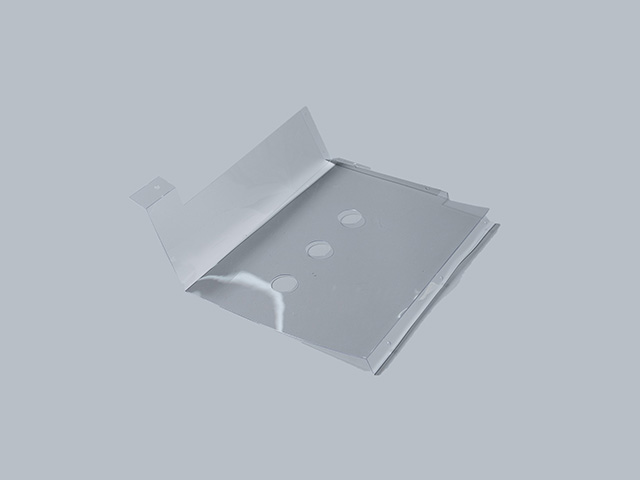
We require a stringent evaluation matrix to validate modern barriers. You should apply these four engineering pillars during your initial design phase. They ensure you separate outdated materials from modern structural solutions.
Sustained Thermal Resistance Under Load: Room-temperature static thermal tests remain dangerously misleading. You must look beyond standard specification sheets. Does the barrier retain its insulative profile during maximum cell swell? You must test materials under peak lifecycle compression loads. An insulator performing well at zero pressure might fail entirely at 1000 kPa. We demand dynamic thermal profiling for all future designs.
Structural and Dimensional Stability: We rigorously evaluate the core strength-to-weight ratio. A robust composite insulation board acts as a true structural load-bearing component. It absorbs kinetic impact energy efficiently. You can optimize external endplates using these rigid properties. This strategy reduces overall pack weight compared to heavy steel enclosures. It gives you a stronger, lighter mechanical framework.
Flame Retardancy and Gas Deflection: Your selected materials must guarantee strict UL94 V-0 compliance. They need to withstand 800°C direct plasma impingement. They must survive this intense heat without collapsing structurally. This barrier prevents domino-effect thermal propagation across adjacent modules. A collapsing material allows flames to leap directly across critical safety gaps.
Cleanliness and Dielectric Reliability: Your chosen compound must exhibit perfect non-particulating properties. It should resist aggressive chemical degradation completely. Automotive environments expose materials to potential glycol coolant leaks. Electrolyte off-gassing also creates highly corrosive atmospheric conditions. The material must maintain its core dielectric strength despite heavy chemical exposure.
Different chemical platforms present unique engineering trade-offs. We break down the exact performance realities below. There is no single perfect material. You must balance thermal metrics against mechanical durability actively.
Material Category | Primary Advantage | Primary Limitation | Best Application Zone |
|---|---|---|---|
Aerogel Composites | Ultra-low thermal conductivity | Brittle under dynamic swelling | Micro-isolation (Cell-to-Cell) |
Thermoset Boards (FR4) | Extreme mechanical durability | Heavier profile weight | Macro-isolation (Module Endplates) |
Advanced Mica | High-temperature resistance | Vulnerable to hydrolysis & dusting | Top cover spark deflection |
Ceramifiable Silicones | Flexible application, robust char | Complicates recycling efforts | Complex 3D pack geometries |
Aerogel systems provide exceptional baseline thermal performance. They offer the lowest static thermal conductivity available today. Metrics typically hover around 0.015 to 0.035 W/m·K. You can reduce functional barrier thickness by up to 80 percent. However, aerogels remain notoriously brittle under dynamic stress. They require secondary elastic compression pads. These secondary pads handle dynamic cell swelling safely. Without them, the rigid aerogel matrix suffers catastrophic brittle failure.
Thermoset materials deliver extreme mechanical durability. Manufacturers heavily customize these epoxy systems using precise CNC machining. They are excellent for macro-level battery module protection. They withstand severe crushing forces effortlessly. Unfortunately, they weigh considerably more than aerogel alternatives. Their rigid nature demands exceptionally tight manufacturing tolerances. You cannot easily bend them around complex corners.
Mica sheets remain a popular high-temperature legacy choice. They easily withstand temperatures exceeding 1000°C using incredibly thin profiles. Yet, they remain highly vulnerable to ambient hydrolysis. High-humidity environments cause severe cracking over time. They pose a significant risk of dangerous layer delamination. Delaminated mica loses its physical integrity rapidly. It turns into a useless powder under heavy vibration.
These systems offer a highly modern flexible alternative. They form robust ceramic shells only when temperatures exceed 600°C. They stay completely flexible at normal room temperatures. You can apply them easily to highly complex internal geometries. However, their strong adhesion creates potential downstream problems. It can severely complicate eventual pack rework and recycling processes.
You must match the correct physical format to specific spatial zones. A single pack requires multiple distinct insulation strategies. Let us examine the three primary architectural levels.
This micro-isolation prevents highly localized thermal spread. You want to maintain optimal energy density between individual cylindrical cells. Engineers utilize ultra-thin flexible laminates here. Coated meta-aramids provide excellent localized thermal deflection. You can also deploy advanced aerogel hybrid films. These thin films establish effective micro-isolation barriers. They stop a single failing cell from igniting its immediate neighbor.
Macro-isolation requires much more robust structural intervention. We implement rigid insulation board barriers between massive sub-assemblies. You can integrate advanced phase-changing materials here too. Many engineers design complex maze-sealed compartments inside the battery module. These physical compartments isolate dangerous combustible off-gassing. They direct explosive venting toward single-direction burst valves safely. This containment strategy saves the overall vehicle from total combustion.
External enclosures face entirely different environmental threats. We actively replace heavy metal lids utilizing high-strength thermoset plastics. These advanced covers defend the internal components effectively. They block harmful ultraviolet radiation and deep water submersion. They deflect sharp road debris striking the undercarriage. Importantly, they successfully contain intense internal blast forces during rare failure events.
Moving from bench testing to automated production introduces massive new challenges. A great laboratory material often fails on the factory floor.
Form Factor Efficiency dictates your actual manufacturing success. Raw material parameters matter far less than final application speed. You must analyze the processing velocity of each format carefully. Custom die-cut components offer fast robotic placement for flat surfaces. Thermoformed plastic sheets adapt perfectly to moderately complex spatial requirements. Heat-shrink spiral wound tubes wrap long cylindrical cells in mere seconds. You need formats suited exclusively for high-speed continuous assembly lines.
Automated Manufacturing Compatibility drives modern facility design worldwide. The global industry continues shifting toward automated dispensable liquids. These one-part fluid systems eliminate tedious masking procedures entirely. They remove annoying dual-mixing times common in older spray-on configurations. You drastically reduce messy material waste on the factory floor. Dispensing robots apply perfect beads of material continuously. They increase daily throughput while maintaining precise quality control standards.
Supply Chain and Sustainability Variables heavily influence long-term component sourcing. You must factor in the availability of safe chemistry profiles. Future regulations will soon ban many current chemical additives. Sourcing a PFAS-free insulation material meets upcoming stringent automotive ESG mandates. Integrating recycled glass-fiber components further improves your corporate environmental compliance rating. You secure your supply chain seamlessly against future regulatory disruptions.
Let us review the most critical next steps for your shortlisting process. There is absolutely no universal material for complete thermal isolation. Your selection requires matching specific geometries against accurate lifecycle pressure assumptions. You must formulate the precise composite blend for your unique architecture. Passive materials alone cannot reverse an initial runaway event. They buy your passengers critical time to escape safely.
We urge engineering teams to adjust their internal validation protocols immediately.
Request continuous end-of-life compression tests directly from your suppliers.
Demand long-term vibration shedding and particulate data aggressively.
Avoid relying solely on basic static room-temperature spec sheets.
Simulate real-world chemical exposure using standard automotive coolants.
We strongly invite you to schedule a dedicated technical consultation. Request tangible physical samples for your internal testing labs. Test them under your actual expected operational loads. Real-world validation remains the only path to guaranteed passenger safety.
A: Cells swell significantly as they age. They generate immense internal pressure over time. If a material compresses too much under loads exceeding 1000 kPa, it physically flattens. This flattening closes the vital thermal gap. It exponentially increases heat transfer between cells. This physical degradation nullifies your intended thermal runaway protections completely.
A: Traditional mica handles extreme heat well. However, it sheds dangerous conductive dust under heavy vibration. Advanced composites like thermoset glass-epoxy offer vastly superior mechanical impact resistance. They feature strictly non-particulating surfaces. They never shed harmful dust onto sensitive electronics. Composites also demonstrate significantly better durability in high-moisture environments.
A: No passive material completely stops an initial catastrophic cell failure. Engineering physics prevents this entirely. Advanced composites are specifically designed to delay rapid propagation. They contain the severe damage by efficiently managing heat transfer. They direct volatile venting gases safely outward. This delay provides passengers the crucial extra minutes needed to exit safely.
A: It depends entirely on your specific application stage. Die-cut insulators offer exact engineering tolerances for flat cell tops and bottoms. They integrate quickly into automated pick-and-place lines. Conversely, dispensable liquid composite coatings offer much higher continuous throughput. They generate significantly lower physical waste when sealing highly complex 3D pack enclosures.


