
Views: 0 Author: Site Editor Publish Time: 2026-05-06 Origin: Site


Composite insulation technology represents the frontier of electrical insulation material development, combining multiple material constituents to achieve property combinations impossible with single-material solutions. These engineered material systems leverage complementary characteristics of different insulation types, creating hybrid constructions addressing demanding requirements in modern electrical equipment. As equipment designs push toward higher power densities, temperatures, and performance levels, composite insulation increasingly becomes the enabling technology.
The evolution from simple homogeneous insulation materials toward sophisticated composite systems reflects the escalating demands of contemporary electrical equipment. Transformers, motors, generators, and power electronics all benefit from composite insulation approaches combining the advantages of papers, films, laminates, and advanced reinforcements. Understanding composite insulation technology enables equipment designers to leverage these advanced materials effectively.
This comprehensive guide examines composite insulation types, manufacturing approaches, properties, and applications. Professional suppliers like Yuffen, an experienced composite insulation manufacturer, provide comprehensive product ranges addressing diverse advanced requirements.
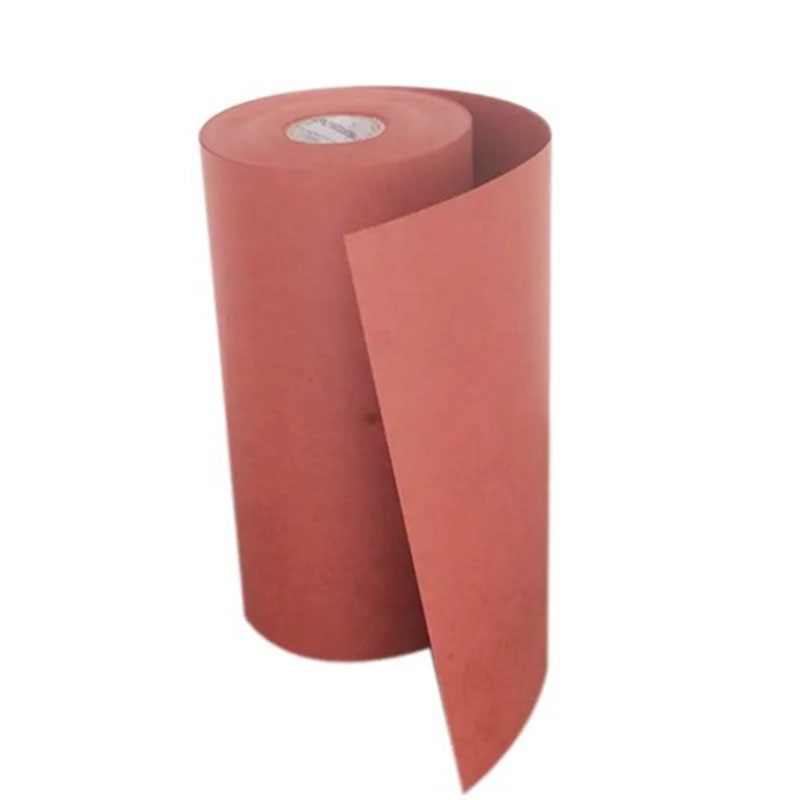
Composite insulation materials combine two or more distinct constituents to achieve property combinations exceeding individual component capabilities. The fundamental principle involves strategic material selection and architecture design to optimize overall performance. Matrix materials provide continuous structure and processing characteristics, while reinforcements enhance specific properties including strength, thermal capability, or electrical performance.
The interface between constituents significantly influences composite properties, with good interfacial bonding ensuring load transfer and preventing premature failure. Surface treatments and coupling agents improve interfacial adhesion in engineered composites. Careful processing controls maintain interfacial integrity throughout manufacturing.
Property prediction for composites requires understanding constituent properties and architecture effects. Rule-of-mixtures models provide initial estimates, with more sophisticated models addressing complex loading and environmental conditions. Testing validates composite performance for critical applications.
Polymer matrices including epoxies, polyesters, phenolics, and polyimides provide the continuous phase binding reinforcement constituents together.Matrix selection influences processing characteristics, thermal capability, and chemica Learn more about our Fire-Resistant Mica Tape for Cablesl resistance. Thermosetting polymers dominate due to their superior thermal and mechanical properties.
Paper substrates including cellulose and aramid papers provide flexibility and impregnation capability. Papers enable penetration of varnish and resins during manufacturing, creating fully cured insulation systems. Paper basis weights and fiber types affect composite properties and processing characteristics.
Film constituents including polyester, polyimide, and fluoropolymer films contribute dielectric strength and moisture resistance. Films provide smooth, consistent insulation layers with controlled thickness. Film-polyimide and film-polyester combinations commonly appear in electrical composites.
Reinforcement fibers including glass, aramid, and carbon fibers provide mechanical strength and thermal conductivity. Fiber type, orientation, and content affect composite stiffness, strength, and thermal properties. Glass fibers offer cost-effective reinforcement, while aramid and carbon fibers address premium applications.
Paper-film composites combine flexible paper substrates with polymer film layers, creating insulation with enhanced dielectric strength and moisture resistance compared to paper alone.Kraft-polyester composites laminate polyester film between paper layers, achieving dielectric performance approaching film-only materials while maintaining paper flexibility and impregnation capability Learn more about our PET Learn more about our PET Mylar Film for Electrical Applications Mylar Film for Electrical Applications.
Aramid-polyimide composites utilize Nomex aramid papers with Kapton polyimide films, achieving exceptional thermal capability for demanding applications. These high-performance composites serve traction motors, aerospace equipment, and other applications requiring superior thermal performance. The combination of aramid thermal stability and polyimide dielectric properties creates unique capabilities.
Fish paper composites incorporate specialized papers with film layers addressing specific application requirements. These construction-specific composites optimize properties for particular equipment types and manufacturing processes. Custom composite design enables optimization beyond standard product offerings.
Laminated board composites combine multiple sheet materials into thicker constructions with enhanced properties. Phenolic-glass-epoxy laminates stack different material types to achieve balanced performance. These constructions address requirements exceeding single-laminate capabilities.
Prepreg composites utilize partially cured resin systems that fully cure during lamination, creating void-free bonds between layers. This manufacturing approach enables complex multi-layer constructions with consistent quality. Prepreg materials require temperature-controlled storage and handling.
Flex-rated laminates combine rigid and flexible materials enabling curved surface applications. These materials provide structural support where needed while accommodating bends and curves. Flex-rated composites serve applications with space constraints or unusual geometries.
Nanocomposite insulation incorporates nanoscale fillers improving dielectric and thermal properties. Nanoparticles including silica, alumina, and carbon nanotubes modify polymer matrix behavior at low concentrations. These advanced materials represent emerging technology with growing commercial applications.
Dielectric constant modification through nanocomposite technology enables tailored permittivity for specific applications. Lower dielectric constant nanocomposites reduce parasitic capacitance in high-voltage applications. Higher dielectric constant versions serve capacitor applications requiring compact designs.
Thermal conductivity enhancement through nanoscale fillers addresses heat transfer challenges in high-power-density equipment. Nanocomposite thermal interface materials provide electrical isolation with improved heat flow. These materials enable compact designs limited by thermal constraints.
Composite insulation achieves dielectric strengths approaching or exceeding homogeneous materials through optimized architectures. Film layers provide high-strength dielectric barriers, while paper substrates ensure impregnation and void elimination. Layer arrangement and thickness distribution optimize voltage stress distribution.
Dielectric constant values in composites depend on constituent properties and volume fractions. Calculation methods including Maxwell's equations and effective medium theory predict composite permittivity. The ability to tailor dielectric constant enables optimization for specific applications.
Partial discharge resistance in composites benefits from void-free processing achievable through paper impregnation. Film layers provide inherent partial discharge resistance, with interface characteristics affecting overall performance. Quality composites demonstrate excellent resistance to partial discharge degradation.
Temperature capability in composites depends on constituent thermal ratings, with matrix glass transition or decomposition temperatures establishing limits. Aramid and polyimide constituents enable Class F and Class H capability in appropriate composites. Matrix selection determines high-temperature limits for glass or carbon reinforced systems.
Thermal conductivity enhancement through conductive reinforcements enables improved heat transfer. Carbon nanotube composites achieve thermal conductivity improvements while maintaining electrical isolation. These materials serve demanding thermal management applications.
Thermal expansion matching between constituents affects composite dimensional stability and interfacial integrity. Coefficient of thermal expansion differences create residual stresses during cure or temperature cycling. Careful constituent selection minimizes thermal expansion mismatch effects.
Flexural strength in composites depends on reinforcement type, content, and orientation. Unidirectional laminates maximize strength along fiber directions, while random orientations provide more isotropic properties. Fabric reinforcements balance strength in multiple directions.
Interlaminar shear strength indicates resistance to delamination between layers. Surface treatments and resin content affect interlaminar properties. Poor interlaminar performance represents common composite failure mode requiring attention during design and manufacturing.
Impact resistance varies significantly across composite types, with fiber reinforcement providing substantial improvements over unreinforced polymers. Aramid fibers offer superior impact resistance compared to glass, while carbon provides stiffness with moderate impact capability. Impact-resistant composites serve demanding service environments.
Electric vehicle traction motor insulation increasingly utilizes composite systems addressing demanding EV requirements. Higher operating temperatures, limited cooling, and vibration exposure create challenging conditions. Aramid-polyimide composites provide the thermal capability and mechanical robustness required for EV traction motors.
Power electronics in EV drivetrains require composite insulation for bus bars, modules, and thermal interfaces. The combination of dielectric performance, thermal management, and reliability proves essential for EV power electronics. Thermally conductive composites address thermal interface requirements while maintaining electrical isolation.
Battery system composite insulation addresses cell isolation, module separation, and pack-level protection requirements. Flame-retardant composites prevent fire propagation in thermal runaway scenarios. These safety-critical applications demand high-performance composite materials.
Aerospace electrical systems utilize advanced composite insulation meeting stringent weight, performance, and reliability requirements. The combination of high strength-to-weight ratios and excellent electrical properties makes composites essential for aerospace applications. High-temperature composites serve engine compartment and de-icing applications.
Military equipment specifications demand robust insulation systems with enhanced environmental resistance. Composite materials withstand salt spray, vibration, and temperature extremes better than conventional alternatives. Defense sector requirements drive development of advanced composite insulation technology.
Space applications require materials surviving launch vibration, thermal extremes, and vacuum conditions. Specialized composite insulation addresses these unique requirements with validated performance. The demanding space environment pushes composite technology to its limits.
Industrial motors and generators benefit from composite insulation enabling higher power densities and operating temperatures. Class F and Class H insulation systems utilize composite constructions achieving enhanced thermal capability. These materials support more compact, efficient industrial equipment designs.
Power transformer composite insulation combines cellulose papers, pressboards, and synthetic materials in optimized constructions. The combination of oil-impregnated cellulose with synthetic barriers provides reliable high-voltage performance. These composite approaches build on proven materials with targeted enhancements.
Railway traction equipment utilizes composite insulation addressing demanding vibration, temperature, and contamination exposure. The combination of mechanical robustness and electrical performance suits railway applications. Growing railway electrification creates sustained demand for composite insulation in traction systems.
Specification | Yuffen Composites | Competitor A | Competitor B | Industry Average |
|---|---|---|---|---|
Dielectric Strength | 50+ kV/mm | 40 kV/mm | 35 kV/mm | 42 kV/mm |
Temperature Rating | Class H (180°C) | Class F (155°C) | Class E (120°C) | Class F |
Flexural Strength | 400 MPa | 320 MPa | 280 MPa | 333 MPa |
Custom Engineering | Full service | Limited | None | Partial |
Quality System | ISO, AS9100 | ISO | ISO | ISO |
Technical Support | Dedicated team | Basic | Minimal | Basic |
Yuffen composite insulation materials provide superior specifications across critical performance dimensions. Advanced temperature ratings enable compact designs for demanding applications. Full-service custom engineering capabilities support specialized requirements beyond standard products. AS9100 certification addresses aerospace quality system requirements.
Nanocomposite technology development continues creating materials with enhanced properties at lower cost. Carbon nanotube and graphene reinforcements improve electrical and thermal properties at low loadings. These emerging materials will increasingly appear in commercial composite insulation products.
Bio-based and sustainable composite constituents address environmental concerns with renewable material options. Natural fiber reinforcements offer environmental advantages for applications where maximum performance is not required. Sustainability considerations increasingly influence composite material selection.
Recyclable composite technologies address end-of-life concerns with materials designed for recycling. Thermoplastic matrix composites enable remelting and reprocessing, while thermoset composites face recycling challenges. Development of recyclable options represents active research and development focus.
Wide-bandgap semiconductor adoption in power electronics creates new composite insulation requirements. Silicon carbide and gallium nitride devices operate at higher temperatures, requiring compatible insulation systems. Composite material development addresses these emerging requirements.
Wireless power transfer systems require specialized composite insulation addressing electromagnetic and thermal challenges. These emerging applications create new opportunities for composite materials. The growth of wireless charging in consumer and industrial applications drives demand.
Megawatt-scale power electronics for electric aircraft and ships require composite insulation meeting unique requirements. These emerging applications push performance boundaries while demanding reliability and safety. Composite material development supports these advanced applications.
Accurate requirements analysis ensures appropriate composite selection for specific applications. Electrical requirements including voltage class and dielectric strength determine minimum performance specifications. Temperature environment including self-heating and ambient conditions establishes thermal rating requirements. Mechanical requirements including loads, vibration, and impacts define structural specifications.
Environmental requirements including humidity, chemical exposure, and radiation affect composite selection. Flame retardance requirements for certain applications may mandate specialized materials. Regulatory requirements including UL and IEC standards may constrain available options.
Life expectancy requirements influence composite selection through aging characteristics and property retention. Premium composites providing enhanced longevity may justify higher initial costs for critical applications. Standard options may suffice for applications with shorter expected service lives.
Custom composite engineering capabilities enable optimization beyond standard product offerings. Suppliers with development capabilities support unique requirements through material customization. Early supplier involvement during design phases typically yields better results.
Quality system certification verifies supplier commitment to consistent performance. ISO 9001 provides baseline certification, with industry-specific certifications addressing particular requirements. AS9100 certification addresses aerospace quality system demands.
Technical support capabilities differentiate suppliers for applications requiring application engineering. Design assistance, failure analysis, and responsive communication add value beyond basic product supply. Long-term relationship potential supports strategic supplier selection.
Composites combine advantages of multiple material types achieving properties impossible with single materials. Higher dielectric strength, enhanced thermal capability, and improved mechanical properties result from optimized constituent selection and architecture. Custom engineering enables optimization for specific requirements.
Identify electrical, thermal, and mechanical requirements. Evaluate standard products meeting requirements. Consult with suppliers for custom engineering when standard products are inadequate. Consider processing requirements and supplier capabilities.
In many applications, composites provide superior alternatives to traditional materials. Higher performance justifies premium pricing for demanding applications. Standard applications may continue using conventional materials where adequate.
Processing requirements depend on composite type and matrix chemistry. Thermoset composites require cure cycles with temperature and pressure control. Thermoplastic composites require heating above melting temperatures. Supplier guidance ensures appropriate processing.
Humidity affects composites differently depending on matrix chemistry and reinforcement type. Glass-reinforced materials resist moisture better than cellulose-containing alternatives. Chemical exposure may require specialized matrix selection.
Material certifications verify composition and properties. Test reports document performance against specifications. Traceability documentation supports quality investigation when issues arise. Supplier quality systems verification ensures consistent performance.
Composite insulation technology provides advanced material solutions enabling modern electrical equipment performance levels impossible with traditional homogeneous materials. The combination of papers, films, laminates, and reinforcements in engineered constructions creates property combinations addressing demanding requirements. Understanding composite technology enables effective utilization of these advanced materials.
Quality composite insulation from experienced suppliers ensures reliable performance in critical applications. Technical requirements analysis and supplier partnership enable appropriate material selection and optimization. Professional manufacturers like Yuffen, an experienced composite insulation manufacturer, provide comprehensive engineering capabilities addressing diverse advanced requirements.
Continued development of nanocomposite materials, sustainable constituents, and application-specific solutions will expand composite insulation capabilities. Emerging applications in electric vehicles, aerospace, and advanced power electronics drive continued material advancement. Strategic partnership with capable suppliers positions equipment manufacturers for competitive advantage through advanced insulation technology.


