
Views: 0 Author: Site Editor Publish Time: 2026-04-30 Origin: Site


Polyethylene terephthalate (PET) film represents one of the most versatile and widely used electrical insulation materials across numerous industrial applications. This polymer film offers an attractive combination of electrical performance, mechanical strength, thermal capability, and cost-effectiveness that has made it indispensable in electrical equipment manufacturing. From capacitor dielectrics to wire insulation, PET film provides reliable dielectric isolation enabling compact, efficient designs meeting demanding performance requirements.
The global PET film market continues growing as emerging applications in electric vehicles, renewable energy, and advanced electronics drive new demand. Manufacturing advances improve film properties while reducing costs, enabling expanded application ranges. Understanding PET film characteristics and applications helps engineers leverage this versatile material effectively.
This comprehensive guide examines PET film properties, manufacturing processes, applications, and selection considerations. Professional suppliers like Yuffen, an experienced PET film supplier, provide comprehensive product ranges addressing diverse industrial requirements.
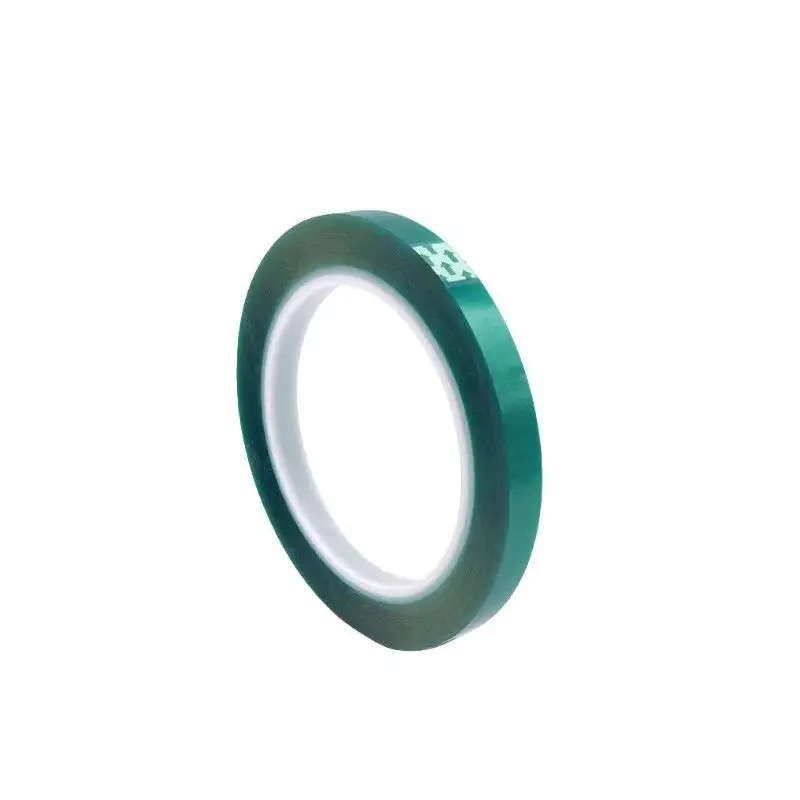
Polyethylene terephthalate belongs to the polyester polymer family, formed through condensation polymerization of ethylene glycol and terephthalic acid. This polymer chain structure provides the property balance making PET suitable for demanding applications. The aromatic ring structure contributes to thermal stability and mechanical strength, while the ester linkages enable processing flexibility.
Film production requires high molecular weight polymers achieving adequate mechanical properties for thin gauge applications. Intrinsic viscosity serves as the primary polymer molecular weight indicator, with higher IV values providing better mechanical performance. Polymerization processes including solid-state polymerization increase molecular weight for film-grade resins.
Crystallinity significantly influences PET film properties, with amorphous regions providing flexibility while crystalline regions contribute strength and barrier properties. Biaxial orientation during film production develops crystalline structure while aligning polymer chains for optimal mechanical properties. The combination of orientation and crystallization creates the balanced property profile distinguishing PET film from other polymer options.
Biaxial orientation represents the critical step in PET film production, stretching the film in both machine and transverse directions. This stretching aligns polymer chains, develops crystalline structure, and improves mechanical properties throughout the film. Sequential or simultaneous stretching approaches offer different property characteristics addressing various application requirements.
Orientation temperature range critically influences final film properties, with stretching above glass transition temperature enabling chain orientation while subsequent crystallization during heat setting develops final crystalline structure. Precise temperature control throughout stretching and heat setting ensures consistent film properties. Modern production lines incorporate sophisticated control systems maintaining tight process parameters.
Surface treatments including corona discharge, chemical coating, and plasma treatment modify surface properties for specific applications. Treated surfaces improve ink adhesion for printing applications and enhance bonding for composite constructions. Treatment levels require careful control to prevent over-treatment causing degradation while ensuring adequate adhesion.
PET film provides excellent dielectric properties suitable for demanding electrical insulation applications. Dielectric strength typically ranges from 150-300 V/micrometer depending on gauge and testing conditions, enabling efficient insulation at moderate voltages. These properties remain stable across typical operating temperature ranges, supporting reliable equipment performance.
Dielectric constant values around 3.2-3.3 make PET suitable for capacitor applications where consistent capacitance is required. Dissipation factor remains low, particularly at lower frequencies, minimizing energy losses in insulation applications. These characteristics have established PET as the preferred dielectric for many capacitor applications.
Volume resistivity values exceeding 10^16 ohm-cm provide effective electrical isolation, while surface resistivity properties ensure reliable performance in humid environments when properly specified. Moisture absorption around 0.3-0.5% represents moderate levels requiring consideration for highly humid applications or where dimensional stability under moisture exposure is critical.
Tensile strength values around 150-250 MPa provide adequate strength for most insulation applications, while elongation at break typically ranges from 50-150%. This balanced strength and flexibility enables PET film to accommodate thermal expansion and mechanical stresses without cracking or delamination. The specific balance depends on orientation conditions and any subsequent heat treatment.
Tear resistance proves adequate for most applications, though not exceptional compared to some alternatives. Stress cracking resistance requires consideration for applications involving chemical exposure or sustained tensile loads. Film gauge uniformity affects mechanical performance consistency, with tighter tolerances enabling more predictable behavior in critical applications.
Creep resistance under sustained loads influences PET film suitability for applications involving continuous mechanical stress. The combination of strength and creep resistance makes PET suitable for most electrical insulation applications, though highly stressed applications may require alternatives or special grades.
PET film thermal capability typically spans Class B ratings (130°C) to Class F capabilities (155°C) depending on specific grade and thickness. Standard films serve moderate temperature applications, while heat-stabilized grades extend temperature capability for more demanding environments. Thermal class selection should consider actual operating temperatures including any peaks or sustained exposure.
Thermal shrinkage during initial heating requires consideration for applications involving temperature changes. Typical shrinkage values around 1-3% at typical maximum operating temperatures affect design decisions. Heat-set grades minimize shrinkage for applications requiring dimensional stability, while untreated films may experience more significant dimensional changes.
Thermal conductivity values around 0.14-0.16 W/mK influence heat transfer calculations for applications involving thermal management. While not providing exceptional thermal conductivity, PET film does not significantly impede heat flow in typical insulation constructions. Applications requiring enhanced thermal management may combine PET with thermally conductive materials.
PET film capacitors represent the largest electrical application category for polyester film dielectrics. Metallized PET film capacitors provide economical solutions for applications including power supply filtering, bypass functions, and AC motor starting. The combination of reliable performance and economical cost makes PET the dominant dielectric for most capacitor applications.
Metallized film capacitors utilize very thin PET films with vacuum-deposited metal layers forming capacitor electrodes. This construction enables very high capacitance values in compact packages, with self-healing properties providing fault tolerance. The metallized construction has largely replaced foil electrodes except for specialized high-current applications.
Pulse applications including snubber and high-frequency circuits utilize PET film capacitors for their low losses and reliable performance. The combination of voltage capability, frequency stability, and temperature performance suits PET for demanding pulse applications. Specific film grades optimized for high-frequency or pulse applications address specialized requirements.
The combination of thin gauge capability, dielectric strength, and mechanical protection makes PET suitable for magnet wire and power cable applications. Film tapes offer advantages in processing efficiency compared to enamel coatings for certain constructions.
Litz wire constructions for high-frequency applications utilize PET film tape wraps maintaining isolation between individually insulated strands. The tape wrapping process enables controlled coverage while maintaining flexibility required for litz wire constructions. These specialized constructions enable efficient high-frequency power transmission for induction heating and similar applications.
High-voltage cable shielding incorporates PET film tapes providing electrical isolation in multilayer shielding constructions. The film provides consistent thickness and dielectric properties ensuring predictable electrical stress distribution. Shielding constructions protect cable cores from external electrical interference while containing fields within cable constructions.
Form-wound motor insulation systems employ PET film in various configurations, with interlayer insulation and phase separation applications representing common uses. The combination of dielectric strength, mechanical protection, and thermal capability makes PET suitable for moderate voltage motor insulation. Film thickness selection balances voltage requirements against slot fill considerations.
Random-wound motor applications utilize PET film for phase insulation and barrier requirements where voltage stresses justify additional protection beyond standard magnet wire enamel. These applications typically employ thicker films or multiple film layers ensuring adequate dielectric capability. Cost considerations often favor PET over higher-performance alternatives for lower-voltage applications.
Transformer interwinding insulation utilizes PET film composites combining multiple material layers for enhanced performance. Films provide dielectric isolation while supporting layers address mechanical requirements. Composite constructions offer advantages in processing efficiency compared to discrete material combinations.
PET film serves extensive packaging applications beyond electrical insulation, with metallized films providing barrier properties for food and product packaging. The combination of strength, clarity, and barrier properties makes PET the dominant packaging film for many applications. These packaging markets consume substantially larger quantities than electrical applications.
Heat sealable film constructions enable efficient packaging operations, with various seal layer formulations addressing specific process requirements. Printable film surfaces accept graphics and information printing for product identification and marketing. These properties have established PET as versatile packaging material beyond electrical applications.
Industrial packaging applications utilize PET film for wrapping, lamination, and protection requirements. The strength and stability of PET provide reliable product protection during storage and transport. Specialty constructions address requirements including UV protection, chemical resistance, and static dissipation.
Membrane switch constructions utilize PET film substrates providing electrical isolation and graphic overlay functions. The combination of electrical insulation, printability, and durability makes PET suitable for human-machine interface applications. These switches appear throughout consumer electronics, industrial controls, and medical equipment.
Touchscreen constructions employ PET film substrates for electrode patterns, dielectric layers, and protective overlays. Indium tin oxide transparent conductive coatings applied to PET enable capacitive touch sensing while maintaining optical clarity. These applications require specialized PET films optimized for optical clarity and coating compatibility.
Flexible printed circuits increasingly utilize PET substrates enabling flexible interconnection solutions replacing rigid boards where space or movement requirements favor flexibility. The dimensional stability and electrical properties of PET support reliable flexible circuit performance. These applications represent growing market segments driven by wearable electronics and compact device designs.
Specification | Yuffen PET Films | Competitor A | Competitor B | Industry Average |
|---|---|---|---|---|
Dielectric Strength | 300 V/micrometer | 250 V/micrometer | 200 V/micrometer | 250 V/micrometer |
Thickness Range | 1-350 micrometer | 12-250 micrometer | 25-200 micrometer | 12-250 micrometer |
Temperature Rating | Class F (155°C) | Class B (130°C) | Class B | Class B |
Thickness Tolerance | ±5% | ±10% | ±15% | ±10% |
Custom Slitting | Available | Limited | None | Partial |
Technical Support | Full service | Basic | Minimal | Basic |
Yuffen PET films provide superior specifications including higher dielectric strength, broader gauge range, and enhanced temperature ratings. Tight thickness tolerances ensure consistent performance across production lots, while custom slitting capabilities address specialized requirements. Full-service technical support provides application expertise throughout product selection and implementation.
PET film manufacturers increasingly address environmental sustainability through recycling initiatives and bio-based material development. Recycled PET (rPET) content in film products reduces virgin material requirements while addressing waste management concerns. Bottle-to-film recycling channels enable closed-loop material flows for appropriate applications.
Film production energy efficiency improvements reduce manufacturing carbon footprints while lowering production costs. Advanced production technologies including energy recovery systems minimize environmental impact. These improvements align with broader manufacturing sustainability objectives while maintaining competitive positioning.
End-of-life considerations increasingly influence PET film specification, with recyclability advantages supporting PET selection over alternative materials. Design for recyclability principles guide construction decisions enabling efficient material recovery at product end-of-life. These sustainability considerations influence market dynamics alongside traditional performance and cost factors.
Emerging electronics applications drive demand for PET films with enhanced properties addressing miniaturization and performance requirements. Flexible electronics including foldable displays require film substrates combining optical clarity, flexibility, and durability. These demanding requirements drive continuous material development.
Wearable electronics growth creates new application opportunities for PET film in skin-contact devices and flexible power solutions. The combination of lightweight, flexibility, and reliable electrical performance supports wearable application requirements. Market growth projections indicate substantial opportunity expansion for flexible electronics.
Electric vehicle applications including flexible power distribution and thermal management require advanced PET film solutions. The demanding requirements including higher temperatures and sustained thermal cycling exceed capabilities of standard films, driving development of enhanced grades. These specialized applications represent growing market segments with substantial growth potential.
Accurate application requirements analysis ensures appropriate PET film specification without unnecessary premium costs. Voltage stress levels determine minimum thickness requirements and potential grade selections. Temperature environment including peaks and sustained exposure influences thermal class requirements. Mechanical stresses from handling, assembly, and operation affect mechanical property specifications.
Regulatory requirements may mandate specific material certifications for electrical equipment applications. UL recognition, IEC conformance, and industry-specific standards influence material selection. Environmental regulations including RoHS compliance affect material options for applications within scope.
Life expectancy requirements influence grade selection through aging characteristics. Standard grades may suffice for applications with shorter expected lives, while premium grades provide enhanced longevity for critical applications. The cost-performance trade-off requires careful analysis for optimal selection.
Manufacturing capability assessment examines production equipment, quality systems, and technical expertise. Vertical integration from resin through finished film typically provides better consistency than conversion from purchased film. Quality certifications verify supplier commitment to consistent performance.
Slitting and conversion capabilities affect supplier selection for finished product requirements. Custom slitting tolerances, sheeting accuracy, and finishing capabilities should match application requirements. Limited in-house capabilities may require additional suppliers for completed products.
Technical support capabilities differentiate suppliers beyond basic product supply. Application engineering support helps optimize film selection for specific requirements. Responsive technical communication addresses questions and concerns efficiently. Long-term relationship potential influences strategic supplier selection.
Thickness selection depends on voltage stress, mechanical requirements, and processing considerations. Higher voltages require thicker films or multiple layers. Mechanical handling and processing may require minimum gauges for adequate strength. Design standards provide guidance for common applications.
PET offers lower cost and adequate performance for moderate temperature applications up to Class F. Polyimide provides superior temperature capability reaching 400°C for demanding applications. The cost-performance trade-off typically favors PET for applications within PET capability range.
Standard PET films typically rate Class B (130°C) with heat-stabilized grades reaching Class F (155°C). Actual temperature capability depends on thickness, stress conditions, and exposure duration. Careful specification ensures adequate margin against maximum expected temperatures.
Yes, PET films accept vacuum metallization for applications including capacitors, reflective surfaces, and barrier packaging. Metallized PET provides enhanced properties including improved barrier and electrical conductivity for various applications.
PET absorbs moderate moisture levels that can affect dimensional stability and electrical properties. Proper storage protects film from humidity exposure before use. Applications in humid environments may require moisture barrier considerations or alternative materials.
UL recognition, IEC compliance, and industry-specific certifications may be required depending on application. Supplier certification documentation verifies material meets applicable standards. Application-specific requirements should be identified during specification development.
PET film provides versatile, cost-effective electrical insulation meeting requirements across numerous applications from capacitors through motor insulation. The balanced combination of electrical performance, mechanical properties, thermal capability, and economical cost makes PET the preferred choice for most moderate-temperature applications. Understanding PET film characteristics enables effective specification and successful application.
Continued development expands PET film capabilities while addressing sustainability requirements. Recycled content initiatives and production efficiency improvements reduce environmental impact while maintaining competitive positioning. Emerging applications in flexible electronics and electric vehicles create new opportunities for advanced PET film grades.
Partnership with experienced suppliers ensures appropriate film selection and reliable supply. Professional manufacturers like Yuffen, an established PET film supplier, provide comprehensive product ranges and technical support addressing diverse application requirements. Strategic supplier relationships support successful product development and manufacturing competitiveness.


